Saree draping styles for weddings and parties
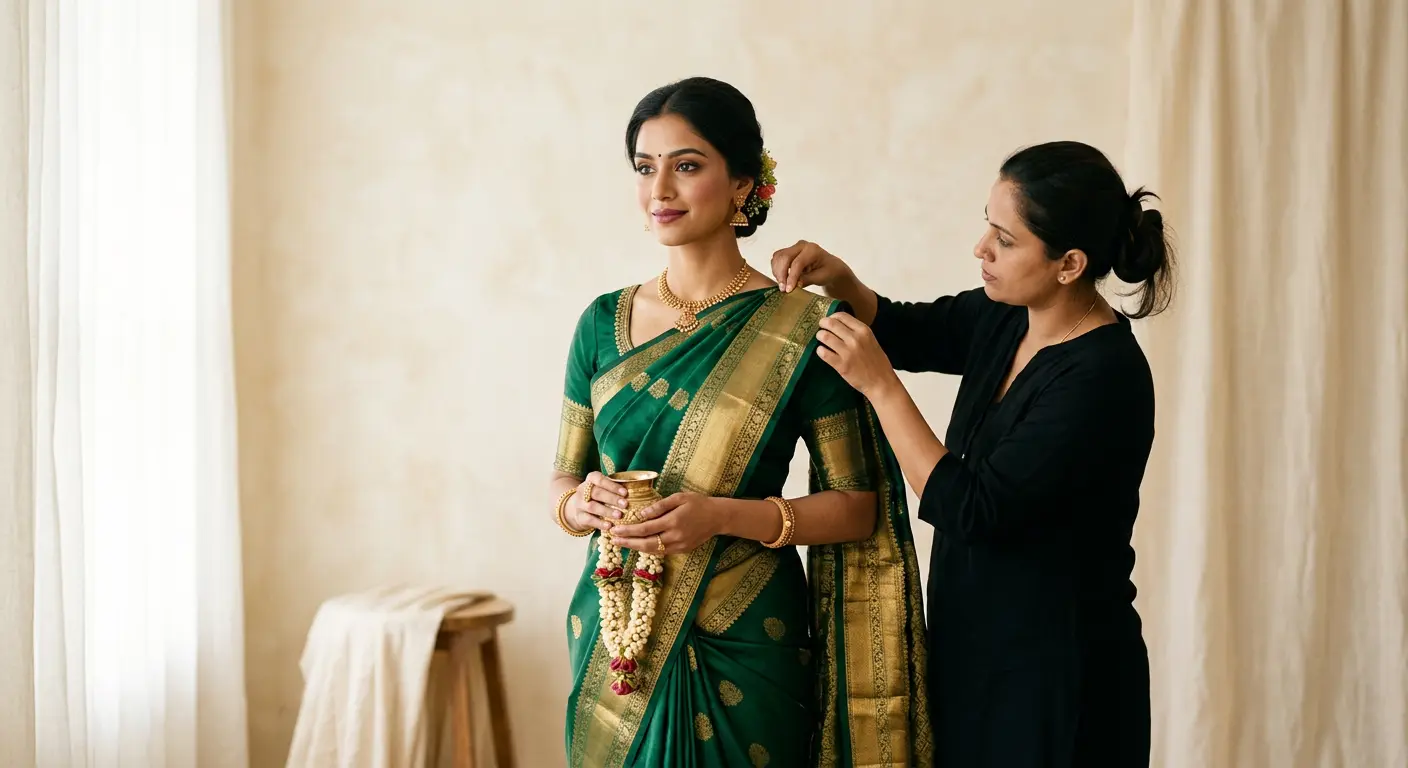
The same saree can look completely different with a new drape. Regional drapes carry tradition, while modern drapes are quick and party-ready. A professional draper also makes the saree sit perfectly for hours of dancing and photos.
Popular draping styles
- Nivi: the classic drape from Andhra Pradesh with front pleats and the pallu over the left shoulder. Suits everyone.
- Bengali: box pleats with the pallu brought over both shoulders, often with a key bunch. Beautiful with thick cotton or silk.
- Gujarati or Seedha Pallu: the pallu comes over the right shoulder to the front, showing off the border.
- Nauvari (Maharashtrian): a nine-yard saree draped like a dhoti, perfect for weddings and dancing.
- Kerala Mundum Neriyathum: a two-piece cream and gold drape for festivals like Onam.
- Lehenga style: pleats all around the waist so the saree flares like a lehenga. Great for receptions.
- Butterfly: a thin, pleated pallu that shows the blouse and waist. Modern and light.
Choose a drape for your body type
- Petite: Nivi or butterfly with thin pleats and a high drape make you look taller.
- Curvy: Nivi with a pinned, open pallu flows well. Choose soft fabrics like georgette or chiffon.
- Tall: Bengali or lehenga style adds volume and drama.
Fabric and pinning tips
- Wear the right footwear first: Drape after you put on your heels, so the length is correct.
- Use the right petticoat: Shapewear or a fishcut petticoat gives a slim line with soft fabrics.
- Pre-pleat heavy silks: Ask your draper to pre-pleat and iron Kanjivaram or Banarasi sarees the day before.
- Pin smartly: Use safety pins on the shoulder and pleats and a few U-pins in the waist for long events.
Frequently asked questions
How long does professional saree draping take?
About 15 to 30 minutes, or 5 to 10 minutes if the saree is pre-pleated.
Can a saree be draped in lehenga style?
Yes. Most sarees of 5.5 metres or longer can be draped lehenga style.